Serving Austin, Texas, from Downtown to North Austin
Sewer Line Replacement Austin: We Replace the Line, Not Your Patience
When your main sewer line has failed, we replace it. We handle sewer line replacement Austin homeowners can plan around, from the first camera inspection to the final backfill and test. We work in older neighborhoods like South Congress and East Austin, where cast iron pipes and mature trees create the exact conditions that lead to sewer line backups. We keep you informed at every step.
What Sewer Line Replacement Involves, Step by Step
Sewer line replacement means removing a section of the main sewer line and installing new pipe in its place. We start by locating the line and inspecting it with a pipe inspection camera. That camera shows us the pipe material, the depth, the slope, and the exact points of failure. In Austin, we often find cast iron pipes that have cracked, corroded, or been root-invaded by trees. We also find older clay tile that has shifted. Once we know what we are dealing with, we mark the route and talk through the options, including trenchless sewer replacement Austin methods that reduce digging.
Before any digging starts, we handle the sewer line replacement permit Austin requires. The City of Austin typically requires a permit for replacing a main sewer line, and the work usually needs to be inspected. We pull the permit and schedule the inspection so you do not have to navigate the process. We also call 811 to have underground utilities marked. That step protects gas, water, and electrical lines that may cross the sewer route. We then protect landscaping and hardscape where we can, and set up barriers to keep the work area safe.
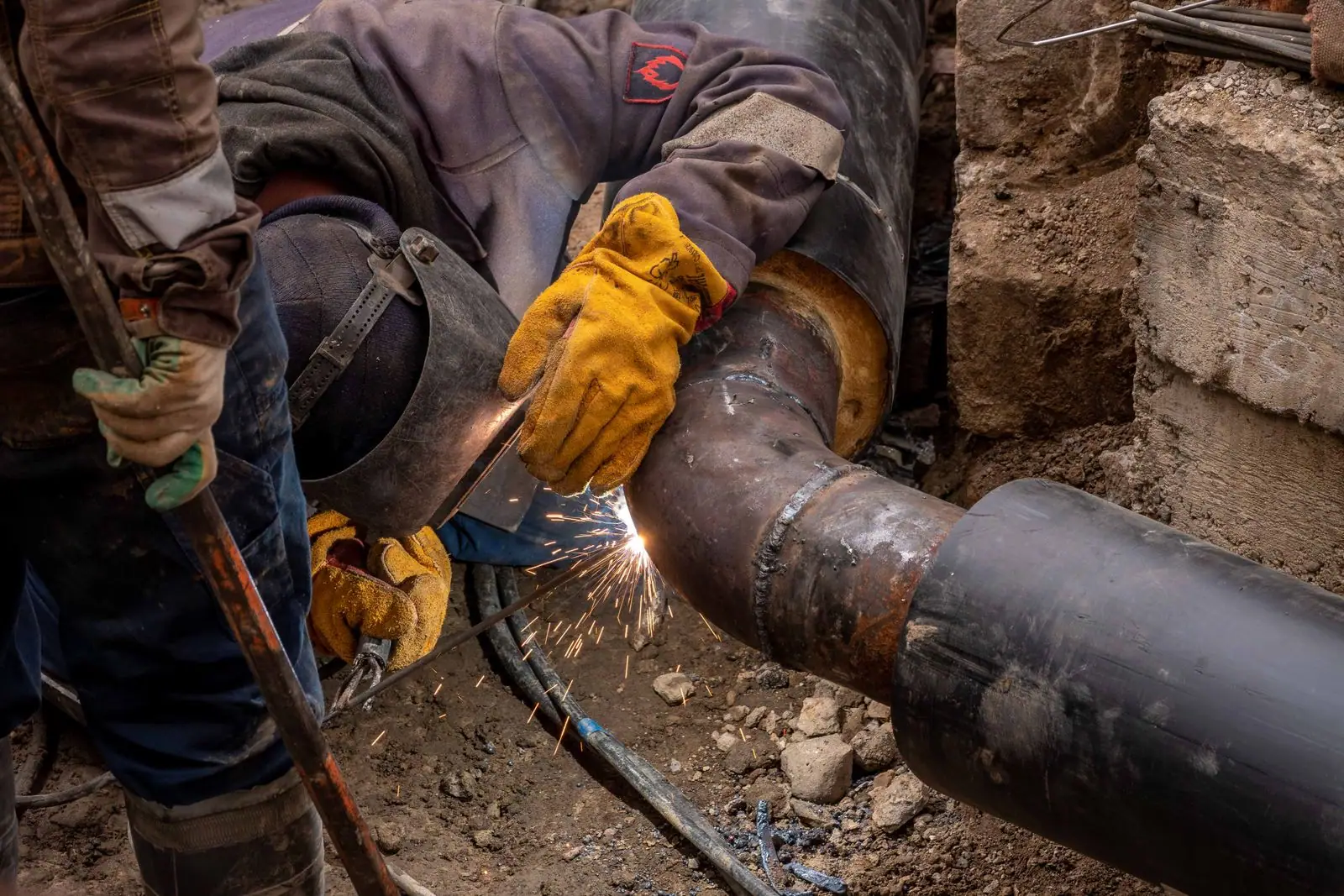
The replacement itself depends on the method. For a traditional open-cut replacement, we dig a trench along the line, remove the old pipe, and lay new PVC pipe. For a trenchless replacement, we may use pipe bursting or a similar method that pulls new pipe through the old line with minimal excavation. Trenchless technology is often a good fit when the old pipe is a candidate for bursting and the route is accessible from a few small pits. We set the new pipe to the correct slope, connect it to the city main or the existing building drain, and backfill in compacted layers.
After the pipe is in, we test it. We run water through the line and may use a camera again to confirm the slope and connections. The City of Austin inspector then reviews the work if the permit requires it. We restore the surface as much as possible, whether that is sod, gravel, or concrete. We clean up the site and walk you through what was replaced. You get a clear explanation of the new line, any remaining older sections, and how to care for the system going forward.
Why Austin Homeowners Choose Us for Sewer Line Replacement
Sewer line replacement is not a job you want to repeat. We focus on doing it once, correctly, with clear communication from the first call to the final walkthrough.
We Diagnose Before We Quote
We do not guess at sewer problems. We run a pipe inspection camera through the line to see the actual condition of the pipe. That tells us whether you need a repair or a full replacement. It also shows us the pipe material, the depth, and any root intrusion. With that information, we can explain your options in plain language. You get a recommendation based on what is in the ground, not on a sales script.
We Handle Permits and Inspections
Sewer line replacement in Austin usually requires a permit and an inspection. We pull the permit and coordinate with the City of Austin. We schedule the inspection at the right stage, so the work is reviewed before we close everything up. That protects you if you ever sell the home. It also means the job meets current plumbing code. You do not have to make phone calls or chase paperwork.
We Work in Tight Austin Lots
Many Austin properties have mature trees, close setbacks, and limited access. We plan the job around those conditions. We use trenchless methods when they fit, which can mean less digging and less disruption to driveways, patios, and landscaping. When open-cut is the better choice, we protect what we can and restore the surface afterward. We know how to work in older neighborhoods without turning the yard into a construction site.
We Explain the Cost Before We Start
Sewer line replacement cost Austin varies with length, depth, pipe material, and access. We give you a written estimate that breaks down what we expect to do. If we find something unexpected, like a collapsed section under a driveway, we stop and talk with you before proceeding. You approve changes before we make them. No surprise line items at the end of the job.
Our Sewer Line Replacement Process
We follow a defined process so you know what happens, when it happens, and what to expect next.
Call and Schedule
You call us at (555) 010-0199 or request service online. We ask about the symptoms: backups, slow drains, gurgling, or sewage odors. We schedule a visit and give you a window. If the line is backing up into the house, we treat it as a priority and talk through immediate steps to limit damage. We arrive with the tools to inspect and diagnose the line.
Camera Inspection and Diagnosis
We locate the main sewer line and run a pipe inspection camera through it. We look for cracks, bellies, offsets, root intrusion, and corrosion. We note the pipe material, which in Austin is often cast iron or clay tile in older neighborhoods. We also check the cleanouts and the connection to the city main. Then we show you what we found and explain whether repair or replacement is the better path.
Permits and Preparation
If replacement is the right call, we pull the sewer line replacement permit Austin requires and schedule the inspection. We call 811 to mark underground utilities. We discuss access with you, including where we will stage equipment and how we will protect landscaping. We set up the work area and confirm the route. You know what will be dug, what will be reused, and what will be restored.
Replacement Work
We remove the old pipe and install new PVC pipe. Depending on the method, we either dig a trench along the line or use trenchless technology to pull new pipe through the old route. We set the slope correctly, make secure connections, and compact backfill in layers. We keep the work area as tidy as possible during the job. We also keep you updated on progress, especially if anything unexpected comes up.
Testing, Inspection, and Cleanup
We test the new line with water and may run the camera again to confirm slope and connections. The City of Austin inspector reviews the work if the permit requires it. We then restore the surface, whether that is sod, gravel, or concrete, and clean up the site. We walk you through what was replaced and answer your questions. You get a clear picture of the new line and how to maintain it.
Local Experience: Sewer Line Replacement in Austin
Austin's housing stock is a mix of eras, and that mix shows up in sewer lines. In older central neighborhoods like Downtown Austin, South Congress, and East Austin, many homes still have cast iron pipes or clay tile laterals. Cast iron from the mid-20th century corrodes from the inside, forming rough spots that catch waste and roots. Clay tile joints shift as the ground moves, and roots find those gaps. In West Campus, older rental houses often have mature trees and heavy use, which accelerates wear. We see these conditions regularly, and they shape how we approach each replacement.
Local conditions also matter. Austin's soil expands and contracts with wet and dry cycles, which can shift pipe and open joints. Mature oak and pecan trees send roots toward the moisture and nutrients in sewer lines. In some areas, older lines were installed at slopes that no longer meet current standards. When we replace a main sewer line, we correct the slope and use materials suited to the soil. We also account for the city main connection, which can be at a depth or location that affects the job.
Common local causes of sewer line failure include root intrusion, corrosion in cast iron pipes, and ground movement that cracks clay tile. We also see damage from previous partial repairs that did not address the whole line. When we assess a line, we look at the full run, not just the spot where the backup happened. That helps us avoid replacing a section only to have another failure nearby. If you are searching for sewer pipe replacement Austin homeowners can plan around, we bring this local context to your job.
What Makes Our Approach Different
We focus on clear communication, clean work sites, and methods that fit the property.
Trenchless When It Fits
We use trenchless technology when the conditions allow it. Pipe bursting can pull new pipe through the old line with minimal digging, which protects driveways, patios, and tree roots. It is not right for every job, so we explain why we recommend one method over another. You get a clear reason, not a sales pitch. When open-cut is the better choice, we plan the excavation to limit disruption.
Communication at Every Stage
You hear from us before we start, during the work, and after we finish. We explain what we found on camera, what we plan to do, and what it will cost. If something changes, we stop and talk with you before proceeding. You are not left wondering what is happening in your yard. We also give you a clear timeline and update you if it shifts.
Clean-Up and Restoration
We treat your property with care. We protect surfaces where we can, contain spoil, and clean the work area before we leave. We restore sod, gravel, or concrete as part of the job. If we cannot restore something to its original condition, we tell you upfront. Our goal is to leave the site looking as close to how we found it as possible.
Code-Compliant Work
We install new pipe to current plumbing code, including slope and material requirements. We pull the permit and schedule the inspection so the work is reviewed by the City of Austin. That matters for your safety and for resale. You get documentation of the work and the inspection. If you ever sell the home, you can show that the replacement was permitted and inspected.
What's Included in a Typical Sewer Line Replacement
Every job is different, but a typical replacement includes these elements.
- Camera inspection of the existing main sewer line before work begins.
- Locating and marking the sewer route and underground utilities.
- Permit application and coordination with the City of Austin.
- Removal of the old pipe, including cast iron or clay tile sections.
- Installation of new PVC pipe set to the correct slope.
- Connection to the city main or existing building drain.
- Backfill with compacted layers and surface restoration.
- Final testing, inspection coordination, and site cleanup.
Problems We Solve with Sewer Line Replacement
We replace sewer lines that have failed or are failing, so you can stop dealing with backups and repairs.
Repeat Sewer Backups
If sewage backs up into your home more than once, the line may be too damaged to repair. Roots, corrosion, or a collapsed section can cause recurring blockages. Cleaning the line helps temporarily, but the underlying problem remains. We inspect the line to confirm the cause. If replacement is the right answer, we remove the failed section and install new pipe. That stops the cycle of backups and emergency calls.
Root Intrusion
Tree roots enter sewer lines through joints and cracks. In Austin, oak and pecan roots are common culprits. Once roots are inside, they grow and catch waste, causing blockages. Cutting the roots provides temporary relief, but they grow back. If the pipe is badly damaged, replacement is the lasting fix. We can use trenchless methods to reduce digging near tree roots.
Corroded Cast Iron Pipes
Cast iron pipes corrode from the inside out. As they age, the walls thin and the interior becomes rough, catching waste and roots. You may notice frequent clogs, rust-colored water, or a sagging line. When corrosion is advanced, repair is not a long-term solution. We replace the cast iron with new PVC pipe. This is common in older Austin neighborhoods.
Collapsed or Offset Pipe
Ground movement can crack or offset pipe, creating a ledge that catches waste. A collapsed section can cause a complete blockage. Camera inspection shows the extent of the damage. If the pipe is collapsed or badly offset, replacement is usually the best option. We remove the damaged section and install new pipe at the correct slope. This restores flow and prevents future backups.
Frequent Clogs in the Main Line
If you are calling a drain cleaner several times a year, the line may be failing. Frequent clogs often mean the pipe interior is rough or the slope is off. Cleaning helps for a while, but the problem returns. We inspect the line to find the cause. If the pipe is in poor condition, replacement can end the cycle. You get a lasting fix instead of temporary relief.
Sewage Odors in the Yard
Sewage odors outside the home can mean a cracked or broken sewer line. Wastewater may be seeping into the soil instead of flowing to the city main. This is a health concern and can attract pests. We inspect the line to locate the break. If the damage is significant, we replace the affected section. This stops the odor and the leakage.
Signs It's Time to Call for Sewer Line Replacement
If you notice any of these, call us at (555) 010-0199 to schedule an inspection.
- Sewage backs up into multiple drains when you use water.
- You hear gurgling from toilets or drains after using an appliance.
- The yard has soggy patches or smells like sewage.
- Your home has cast iron pipes and frequent clogs.
- A camera inspection has shown cracks, offsets, or root intrusion.
- You have had the same line cleaned more than once in a year.
- Your water bill has spiked without a change in usage.
Tools, Materials, and Methods We Use
We use professional-grade tools and materials suited to Austin's soil and housing stock.
Pipe Inspection Camera
We use a RIDGID pipe inspection camera to see inside the sewer line. It shows us the pipe material, the location of damage, and the slope. We can record the inspection and show you what we see. This camera is essential for diagnosing whether you need a repair or a full replacement. It also helps us plan the route and method.
Trenchless Technology
For trenchless sewer replacement Austin jobs, we may use pipe bursting equipment. This pulls new pipe through the old line, breaking it outward. It requires small entry and exit pits rather than a continuous trench. It is often a good fit when the old pipe is burstable and the route is accessible. We explain whether it fits your situation.
PVC Pipe and Fittings
We install new PVC pipe for sewer lines. PVC is durable, smooth, and resistant to root intrusion when joints are properly glued. We use Oatey primer and cement for secure connections. We also use brass fittings where needed. The smooth interior helps waste flow and reduces the chance of future clogs.
Hydro-Jetter and Drain Snake
Before replacement, we may use a hydro-jetter or drain snake to clear the line for camera inspection. A hydro-jetter uses high-pressure water to scour the pipe walls. A drain snake can break up soft blockages. These tools help us see the pipe condition clearly. They are not a fix for a failed line, but they are part of the diagnostic process.
Hand Tools and Safety Gear
We use pipe wrenches, tube cutters, and press tools for connections. We also carry safety gear, including gloves, eye protection, and respirators when needed. We follow OSHA safety training practices on every job. This protects our team and your property. We also use shovels and compactors for backfill and restoration.
Sewer Line Replacement in Austin: Permits, Housing Stock and Local Conditions
In Austin, a main sewer line replacement almost always requires a permit from the City of Austin's Development Services Department. We handle the paperwork, but you should know that inspections are part of the process. Older central neighbourhoods like Travis Heights, Hyde Park and Clarksville often have cast iron pipes that have served their time. The city's expansive clay soils shift with our wet-dry cycles, and that movement is hard on old pipe joints. If your home was built before the 1980s, there's a good chance you have cast iron or Orangeburg pipe that is due for replacement. We pull the permit before we dig, so the work is inspected and documented for resale.
The typical Austin home we see for sewer line replacement is a 1940s to 1970s bungalow or ranch house on a pier-and-beam or slab foundation. In neighbourhoods like South Congress, East Austin and West Campus, mature pecan and live oak trees are a major factor. Roots find their way into hairline cracks and joints, especially in cast iron and clay tile. Our summers bake the ground, then fall rains saturate it, and that constant shrink-swell can crack even newer PVC. Trenchless sewer replacement in Austin is often a good fit for these lots because it minimises digging near established landscaping and driveways, though not every pipe can be replaced that way.
If you're in North Austin or the suburbs, your home may have a longer service lateral that runs under a driveway or a mature lawn. We use a pipe inspection camera to map the line and confirm the material, depth and location of any bellies or breaks. For a main sewer line replacement in Austin TX, we coordinate with the city if the connection at the main needs attention. We also check for cleanout access. Many older homes don't have a two-way cleanout, so we can add one during the replacement. That makes future drain cleaning easier and can help you avoid emergency calls.
When you're comparing sewer line replacement cost Austin estimates, remember that the permit, traffic control if you're in a busy corridor, and restoration of landscaping or concrete are part of the picture. We don't quote over the phone without seeing the line. We camera the pipe, measure the run, and give you a written scope. If trenchless technology is an option, we explain the difference in access and cost. If it's not, we explain why. Our goal is a sewer replacement that passes inspection and serves your home for decades, not just a quick fix that fails in a few years.
A Typical Sewer Line Replacement in Travis Heights
Replacing a Collapsed Cast Iron Sewer Line Under a Mature Pecan Tree
The situation
A 1948 bungalow in Travis Heights had repeated backups in the hall bathroom and a slow kitchen drain. The homeowner had already paid for two drain cleanings in six months. We ran a pipe inspection camera and found the original 4-inch cast iron sewer line had a 12-foot section of heavy corrosion and a complete collapse near a mature pecan tree. The pipe was also bellied in two places, holding water and debris. The homeowner wanted to know whether to repair or replace. Given the age of the pipe, the number of defects and the tree roots, we recommended a full main sewer line replacement rather than another spot repair. We also explained the permit process and provided a written estimate with options for trenchless and open-cut methods.
What we did
We pulled the required permit from the City of Austin and scheduled the work. Because the line ran under a flagstone patio and within the drip line of the pecan, we proposed a trenchless sewer replacement using pipe bursting. We excavated two access pits: one at the cleanout near the house and one at the city connection near the front curb. The old cast iron was burst and pulled through while we pulled new HDPE pipe in behind it. The patio stayed intact. We installed a new two-way cleanout at the house and tied into the city main. The crew used a RIDGID camera to verify the new line's grade and confirm there were no obstructions. The city inspector approved the work, and we backfilled and compacted the pits.
The result
The homeowner now has a new 4-inch HDPE sewer line from the house to the city main, with a cleanout that makes future maintenance straightforward. The patio and the pecan's root zone were undisturbed. The backups stopped immediately, and the fixtures drain normally. We provided a copy of the permit and inspection sign-off for their records. The total cost fell within the range we estimated, and the work was completed in two days. The homeowner told us they appreciated that we explained why a repair would not have solved the underlying problem. This is a typical example of how a cast iron sewer replacement in Austin can be handled with trenchless technology when site conditions allow.
Sewer Line Replacement Cost in Austin: Typical Ranges
These are typical price ranges for sewer line replacement in Austin in 2026. They are for orientation only and are not quotes. Your actual cost depends on pipe length, depth, material, access and whether we can use trenchless methods. We provide a written estimate after camera inspection.
| Job | Typical range | Notes |
|---|---|---|
| Spot repair (partial section, open cut) | $1,200 – $3,500 | Temporary fix for isolated damage; not a full replacement. |
| Trenchless sewer replacement (pipe bursting, up to 50 ft) | $8,000 – $18,000 | Minimal digging; ideal for established landscaping and driveways. |
| Open-cut sewer replacement (up to 50 ft) | $6,000 – $15,000 | More excavation; often used when line is shallow or has multiple bends. |
| Longer runs (50–100 ft) or deep lines | $12,000 – $30,000+ | Depth, soil conditions and restoration add cost. |
| Cast iron sewer replacement (full main line) | $10,000 – $25,000 | Common in pre-1980 Austin homes; includes new cleanout. |
| Permit and inspection fees | $200 – $800 | Varies by scope and city requirements. |
What affects the price
- Pipe length and depth: longer runs and deeper trenches require more excavation and materials.
- Access and restoration: concrete, driveways, patios and mature trees can increase labour and require trenchless methods.
- Pipe material: cast iron, clay and Orangeburg are common in older Austin homes and may need special handling.
- Method: trenchless technology typically costs more than open-cut but avoids landscaping restoration.
- City permits and inspections: required for main sewer line replacement in Austin and included in our estimates.
- Unexpected conditions: rock, groundwater or hidden connections can add cost, which we discuss before proceeding.
Typical market ranges for guidance only, not a quote. Call for a price for your job.
Sewer Line Replacement FAQs for Austin Homeowners
How much does sewer line replacement cost in Austin?
In Austin, typical sewer line replacement costs in 2026 range from about $6,000 to $25,000 for most homes, with trenchless methods often between $8,000 and $18,000. The final price depends on the length of the line, depth, soil conditions, pipe material, access and whether a permit is required. For example, replacing a 50-foot cast iron line under a driveway may cost more than a straightforward open-cut in a yard. These are typical ranges, not quotes. We provide a written estimate after a camera inspection and discuss options so you can make an informed decision. We do not charge for the estimate.
How long does sewer line replacement take in Austin?
Most residential sewer line replacements in Austin take one to three days. A straightforward open-cut replacement of 30 to 50 feet can often be completed in a day or two, including excavation, pipe installation and backfill. Trenchless replacements may take one to two days, depending on the number of access pits and the length of the run. If we encounter rock, groundwater or unexpected connections, it can add time. We also schedule the city inspection, which may add a day depending on availability. We give you a realistic timeline in writing before we start and keep you updated if anything changes. We do not leave an open trench overnight without safety measures.
Do I need a permit for sewer line replacement in Austin?
Yes, in most cases you need a permit from the City of Austin for a main sewer line replacement. The permit ensures the work meets current plumbing codes and that the line is inspected. We handle the permit application and coordinate the inspection. The cost of the permit is included in our estimate. If you are replacing only a small section, a permit may still be required depending on the scope. We advise you not to skip the permit, because unpermitted work can cause problems when you sell your home. We pull the permit before we dig, so you have documentation of the work.
Can sewer lines be replaced without digging in Austin?
Yes, trenchless sewer replacement is possible in many Austin situations. We use pipe bursting or pipe lining to replace or rehabilitate the line with minimal digging. We still need small access pits at each end, but we avoid trenching through lawns, driveways and patios. Trenchless technology works well for straight runs without severe bellies or offset joints. If the existing pipe is collapsed or has multiple bends, open-cut may be necessary. We always camera the line first to determine if trenchless is suitable. It often costs more than open-cut, but it can save you thousands in landscaping and concrete restoration.
When should I replace instead of repair a sewer line in Austin?
If your sewer line is more than 40 years old, has repeated clogs, or shows widespread corrosion, root intrusion or bellies, replacement is usually the better long-term choice. A repair makes sense for a single isolated crack or break in an otherwise sound pipe. But if we find multiple defects, cast iron that is paper-thin, or Orangeburg pipe that has lost its shape, a repair will likely fail again soon. In Austin, the shrink-swell clay soil and mature trees put constant stress on old pipes. We give you a camera recording and a written assessment so you can decide. We never push replacement if a repair is a reasonable option.
What is trenchless sewer line replacement in Austin Texas?
Trenchless sewer line replacement in Austin Texas is a method that replaces the pipe with minimal excavation. We dig small access pits at each end of the run, then either pull a new pipe through the old one (pipe bursting) or install a resin liner (CIPP). Pipe bursting breaks the old cast iron or clay pipe outward while pulling new HDPE pipe into place. This avoids digging up your yard, driveway or patio. Not every line is a candidate; we need a camera inspection to confirm. Trenchless is often more expensive than open-cut but can be less disruptive and faster to restore. We explain both options and let you choose.
What are signs I need a main sewer line replacement for my Austin home?
Common signs include multiple slow drains, gurgling toilets, sewage smells in the yard or basement, water backing up in the shower when you flush, and repeated clogs in the same fixture. If you have a cleanout, you may see water pooling around it. In older Austin homes, cast iron pipes often rust from the inside, causing rough walls that catch debris. A camera inspection is the only way to know for sure. We look for cracks, bellies, root intrusion, offset joints and corrosion. If we find widespread damage, we discuss replacement. If it's a single spot, we may recommend a repair. We give you the footage and our honest assessment.
Why Austin Homeowners Trust Us for Sewer Line Replacement
We built our reputation on transparent sewer line replacement in Austin. That starts with a camera inspection and a written estimate that breaks down materials, labour, permits and restoration. We don't quote over the phone because we don't guess. We show you the footage, explain what we see, and give you options: repair, spot replacement or full replacement, with open-cut and trenchless methods. We never pressure you into a bigger job than you need. If a repair will solve the problem, we say so. If your cast iron pipes are at the end of their life, we explain why replacement is the better investment. Our estimates include the permit and inspection fees, so there are no surprises.
Communication is a core part of how we work. You'll know when we'll arrive, who's coming, and what we'll do each day. We protect floors and landscaping, and we clean up before we leave. We use pipe inspection cameras and press tools from RIDGID and Milwaukee, and we install quality materials like PVC and HDPE pipe, brass fittings and stainless steel braided supply lines. We follow OSHA safety training on every job. We don't claim certifications we don't hold, but we do explain what to look for in a licensed plumber: a state license, insurance, a written contract and a permit. We're happy to answer your questions and walk you through the process from start to finish.
What Austin Homeowners Say About Our Sewer Line Replacement
Read reviews from homeowners in Travis Heights, South Congress, East Austin and North Austin who trusted us with their sewer line replacement.

“Our 1970s house in North Austin had repeated sewer backups. After a camera inspection, Austin Plumbing Co recommended replacing the old cast iron line. The crew was tidy, kept us informed, and finished in two days. They restored the landscaping and walked us through the new line. It was a big job but they handled it well.”
“A pipe burst under our kitchen sink on a Sunday morning in our 1920s bungalow near the Capitol. We called Austin Plumbing Co and they had someone out within a couple of hours. He shut off the water, replaced the corroded section, and checked the nearby lines. No drama, no upsell, just a solid repair. We have used them twice since for smaller issues.”
“Our shower and bathroom sink were draining slowly for weeks. The plumber from Austin Plumbing Co snaked the line and found a hair clog plus some soap scum buildup. He explained what to use to keep it clear and didn't push any expensive treatments. The drain has been fine since. Scheduling was easy and the price matched the estimate.”
Ready to Fix Your Sewer Line in Austin?
If you're dealing with repeated backups or a failing main sewer line, call us at (555) 010-0199. We'll camera the line, explain your options for sewer line replacement in Austin, and give you a written estimate. We serve Downtown, South Congress, East Austin, West Campus and North Austin.
Call (555) 010-0199 · (555) 010-0199